
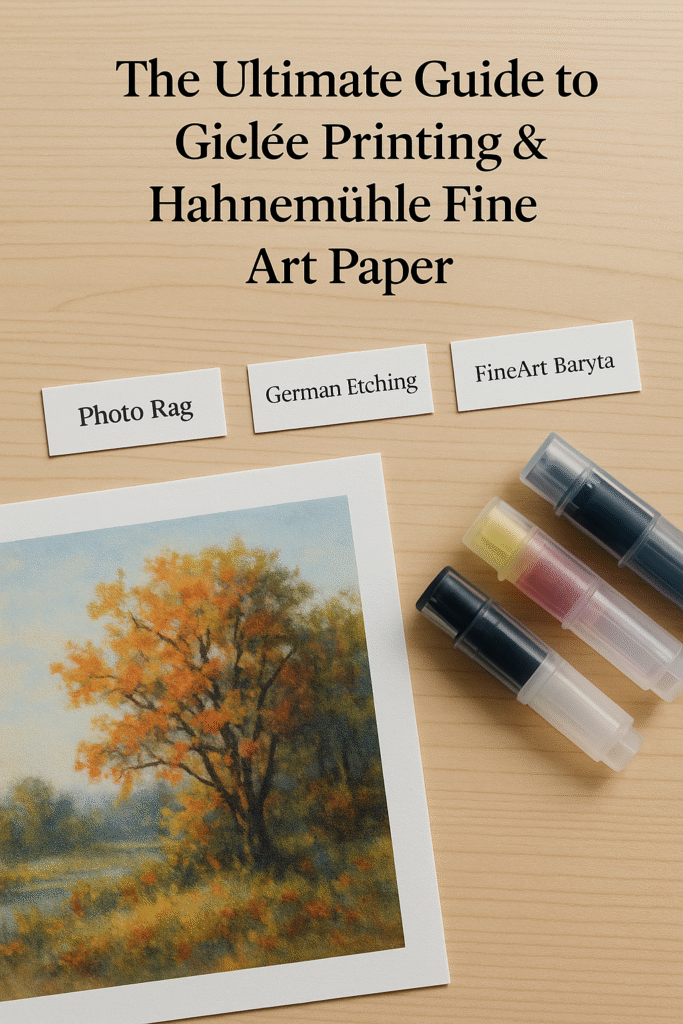
Ultimate Guide to Giclée & Hahnemühle Fine Art Paper
Giclée printing and Hahnemühle paper represent the highest standard in modern fine art reproduction. Artists, galleries, museums, and collectors trust this combination for its unmatched detail, depth, and archival longevity. Whether you’re a seasoned collector or discovering fine art prints for the first time, understanding these materials will help you appreciate why they’re considered the gold standard—and why owning them is both a joy and an investment.
This guide walks you through what makes giclée printing exceptional, why Hahnemühle paper is revered around the world, how to recognize true archival quality, and what makes prints created with this pairing so desirable for your home, your collection, or your gallery.
What Is a Giclée Print?
A giclée print isn’t just a “high-quality print”—it’s a museum-grade reproduction that captures the full emotional and visual impact of the original artwork. The term “giclée,” from the French gicler (to spray), refers to the ultra-fine application of pigment inks through extremely precise print heads. This process allows for:
-
Pigment-based archival inks capable of lasting over a century
-
High-resolution output from up to 12-ink systems, offering superior tonal transitions and color accuracy
-
Fine art substrates such as cotton rag, alpha-cellulose, or textured museum papers
-
Deep saturation and subtle gradients that mimic original paint, pencil, or photographic details
To explore more about how this technology elevates art:
👉 Gallery-Level Detail: Giclée on Museum Papers
Because giclée printing focuses on fidelity rather than mass production, each piece is created with craftsmanship and intention. Owning one is an experience: when you hold the print in your hands, you see and feel the integrity of the artwork preserved with extraordinary accuracy.
Why Hahnemühle Paper Is the Global Standard
Hahnemühle, established in 1584, has a legacy that spans more than four centuries of fine papermaking. Today, they remain the most respected brand in the world for museum-grade fine art paper. Their papers are celebrated for:
-
100+ year archival longevity
-
Exceptional surface textures that enhance the artwork
-
100% cotton rag or alpha-cellulose fibers for durability and softness
-
Acid-free, lignin-free formulations to prevent yellowing
-
Strict quality control trusted by galleries and artists worldwide
Every Hahnemühle sheet is both a canvas and a piece of craftsmanship. Their papers aren’t just paper—they’re artistic mediums in their own right. When pigment inks settle into these fibers, the result is a tactile, luminous surface that feels alive.
Learn the foundations of Hahnemühle’s reputation:
👉 Hahnemühle Museum Paper — The Archival Gold Standard
And discover the intimate sensory experience collectors love:
👉 Touch, Texture, Trust — Hahnemühle FineArt Paper
Why Collectors Prefer Giclée on Hahnemühle
Collectors gravitate toward this pairing for a simple reason: it preserves the soul of the artwork. A giclée on Hahnemühle paper offers:
-
Unmatched color accuracy, ensuring the print reflects the artist’s true vision
-
Deep tonal richness, especially in shadowed or intricately layered works
-
Museum-level longevity, allowing you to pass artwork down through generations
-
Higher resale value, as archival materials and limited editions hold market appeal
-
Authenticity and craftsmanship, suitable for premium collections
These aren’t ordinary prints—they’re enduring pieces of fine art. When you purchase a Hahnemühle giclée, you’re investing in quality you can see immediately and appreciate forever.
Learn why this combination consistently outperforms others:
👉 Why Hahnemühle Prints Outperform Other Fine Art
Paper Types Worth Knowing
Each Hahnemühle paper has its own personality. The one chosen for a specific artwork enhances its unique qualities:
📄 Photo Rag
Soft, smooth, velvety—ideal for portraits, minimalistic works, and photography requiring clean detail and lush matte finishes.
🧵 German Etching
A beautifully textured surface with a handmade feel. Perfect for expressive paintings, charcoal-inspired works, and detailed illustrations.
✨ FineArt Baryta
A premium baryta coating gives this paper a subtle gloss and incredible depth, making colors pop and blacks deepen dramatically.
Choosing the right paper is an art in itself—and when you collect prints from artists or studios who care deeply about materials, you’re receiving a work elevated by that expertise.
Authenticating High-Quality Giclée Prints
To ensure you’re collecting genuine, archival-grade prints, look for:
-
Pigment inks, not dye inks
-
Hahnemühle or comparable museum-grade paper
-
An artist signature or embossing
-
A Certificate of Authenticity (COA)
-
Edition numbers for limited series
-
Professional documentation
These elements protect your investment and verify the artwork’s origin and long-term value.
Read more:
👉 Certified Artist Editions — Why They Matter
👉 Blockchain Registration for Exclusive Art Prints
Investment Potential
Fine art prints created with premium techniques often appreciate over time, especially when:
-
The edition is limited
-
The artist is emerging or established
-
Proper documentation accompanies the piece
-
Materials meet museum standards
High-quality giclée prints on Hahnemühle paper have become an essential part of modern collecting because they offer the perfect balance of accessibility, authenticity, and long-term value.
Learn more:
👉 Investing in Giclée Prints on Hahnemühle Paper
Why You’ll Love Owning a Hahnemühle Giclée Print
Bringing one of these prints into your home doesn’t just add décor—it brings meaning. The depth, texture, softness, and presence of a Hahnemühle giclée transforms any space. These prints glow in natural light, inspire conversation, and carry a signature “museum feel” that elevates your environment.
Collectors often say the same thing:
“It looks even better in person.”
That is the magic of pigment meeting premium paper.
When you purchase a piece printed on Hahnemühle, you’re choosing:
-
Beauty that lasts a lifetime
-
Materials trusted by the world’s greatest artists
-
A piece of art you can feel proud to display
-
A collectible that grows in both emotional and financial value
A Deeper Look: Why Archival Materials Matter More Than Ever
In the world of fine art collecting, materials are no longer a background detail—they are a defining factor in longevity, aesthetic integrity, and financial value. As art increasingly shifts into hybrid and digital forms, collectors seek physical objects that transcend trends and retain significance for decades. This is exactly where archival materials, such as giclée pigment inks and Hahnemühle’s museum-grade papers, become invaluable.
Archival Permanence vs. Standard Printing
Traditional printing methods often rely on dye inks or mass-production papers designed for speed, not endurance. These prints can fade, discolor, or warp within a few years—sometimes even months—depending on environmental conditions.
Archival giclée printing, however, prioritizes permanence:
-
Pigment inks consist of microscopic color particles that bond to paper fibers far more durably than dyes.
-
Hahnemühle fine art papers are engineered with zero acidity, zero lignin, and exceptional fiber stability.
-
Museum storage standards are met by pairing pigment with natural cotton rag substrates.
Independent longevity tests by institutions like Wilhelm Imaging Research show that pigment-based giclée prints can maintain color accuracy for more than a century under proper conditions:
🌐 https://wilhelm-research.com
This means your prints are not only beautiful—they are future-proof. Whether you plan to display them in your home, pass them down, or eventually resell them, you’re investing in work that maintains both its aesthetic and financial value.
Why Collectors, Galleries, and Museums Prefer Archival Prints
Art experts often repeat the same principle: the medium preserves the message. A powerful artwork loses impact if printed on low-quality materials. But when pigment meets Hahnemühle’s specialized surfaces, something extraordinary happens—the meaning of the artwork is not only preserved but enhanced.
Collectors prefer archival prints because:
-
They age gracefully, without yellowing or fading.
-
They offer rich tactile qualities, from matte velvet finishes to luxurious baryta gloss.
-
They maintain market value, especially in certified limited editions.
-
They perfectly reflect the artist’s intended tones and texture.
Even many photographers and digital artists—whose work originates entirely in pixels—choose Hahnemühle paper to give their creations organic presence and lasting authenticity. As digital art markets expand, the demand for premium physical renditions grows alongside them.
For a broader understanding of the growing fine art print market, you can browse industry insights from MoMA’s digital initiatives and conservation standards:
🌐 https://www.moma.org/research/conservation
Why This Matters to You as a Collector
When you choose a giclée print on Hahnemühle paper, you’re choosing:
-
A museum-level artifact, not a disposable print
-
A collectible designed for longevity
-
A piece that enhances the visual atmosphere of your space
-
An investment protected by archival science
-
A meaningful work of art worthy of display and inheritance
Your walls deserve work that will stay vibrant and truthful for generations. Your collection deserves craftsmanship grounded in centuries of tradition.
And most importantly—you deserve art that lasts.
Conclusion on the Ultimate Guide to Giclée & Hahnemühle Fine Art Paper
Giclée printing on Hahnemühle paper provides unrivaled quality, longevity, and collector trust. If you want artwork that maintains its brilliance for decades—and carries the unmistakable presence of fine art—this is the standard to look for.
Your walls deserve beauty that stands the test of time.
Your collection deserves the craftsmanship of true archival art.
This is why your next print should be a Hahnemühle giclée.

Frank Jensen is a lifelong art enthusiast, collector, and co-owner of FineArtKlub. With a deep appreciation for contemporary aesthetics and limited-edition prints, he brings a collector’s mindset into every piece curated on the platform. Frank is driven by the belief that art should feel personal — something you return to, live with, and connect to over time.