
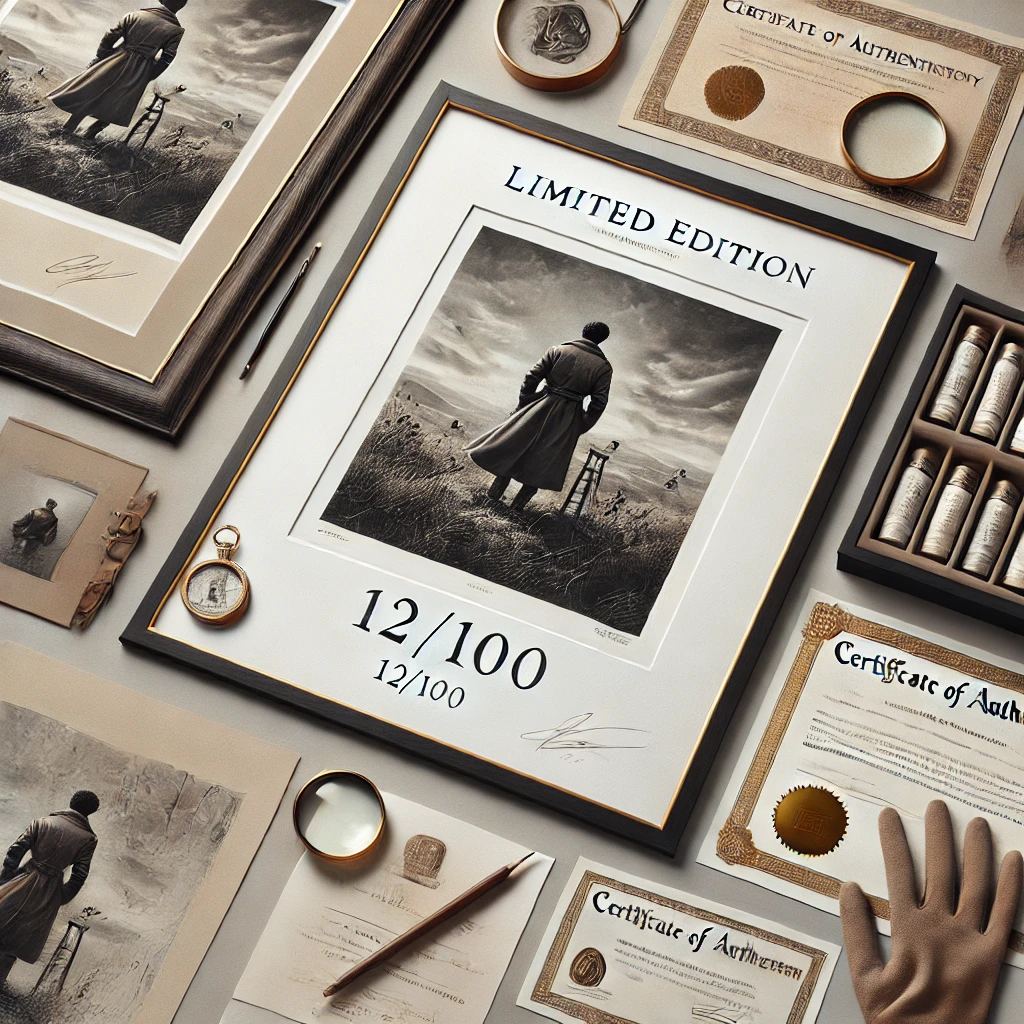
Definitive Guide to Limited Edition & Numbered Prints
Limited edition prints are among the most respected and collectible formats in contemporary art. As the art market grows more global and digital, limited editions have become a trusted bridge between accessibility and exclusivity. Collectors appreciate them for their rarity, authenticity, and investment potential, while artists rely on them to preserve the integrity and value of their work. This guide explains everything you need to know: edition numbering, authentication, rarity, value, materials, pricing, and the role of modern verification systems like blockchain.
Today, limited editions are essential in both traditional fine art markets and online platforms. Museums, auction houses, and collectors’ guilds consider them foundational because they offer a predictable, transparent, and documentable collecting experience. When properly produced and certified, a limited edition print becomes more than a reproduction—it becomes a true asset backed by artistic intent and verifiable provenance.
What Are Limited Edition Prints?
A limited edition means that only a fixed, predetermined number of prints will ever be produced from a particular artwork. This number is set by the artist or publisher before printing begins and cannot be increased later without destroying collector trust.
Examples include notations like:
1/20
7/100
23/250
These fractions tell you exactly how rare the print is and where your print stands in the edition. Once the edition sells out, no more can be produced, which is why limited editions tend to rise in value over time—especially for in-demand artists.
For context, most major fine art institutions differentiate sharply between open editions and limited editions. The Tate Museum provides a general overview of printmaking categories here:
🌐 https://www.tate.org.uk/art/art-terms/p/printmaking
More reading from your own collection:
👉 Limited Edition Prints — Rarity & Market Value
Understanding Edition Numbers
Edition numbers appear as “12/100,” which means:
-
Print number 12
-
Out of a total edition of 100 prints
Edition numbers do not indicate chronological printing order unless explicitly stated. Some collectors prefer low numbers (e.g., 1/100, 2/100), though the value difference often depends on artist reputation rather than numbering alone.
Understanding numbering is crucial because it forms part of the COA, exhibition catalogues, auction listings, and insurance documentation. When resale or appraisal time comes, a clear edition number ensures legitimacy and professional valuation.
Learn more:
👉 Edition Numbers Explained — Rarity & Resale Value
👉 Numbered Edition Prints — Collector Psychology
Signed, Stamped, and Certified Editions
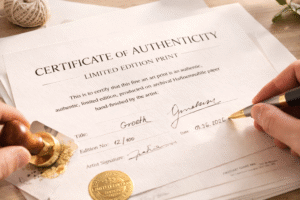
Collectors value limited edition prints that come with:
-
A hand-signed signature from the artist
-
A clearly marked edition number
-
An embossed stamp, foil seal, or publisher mark
-
A Certificate of Authenticity (COA)
Signatures matter because they connect the artist directly to the print. A signed limited edition feels intentional—created with care, oversight, and the artist’s direct acknowledgment. Museums often require signatures for acquisitions.
Premium studios and galleries frequently include watermarks, embossed seals, or custom stamps to further secure authenticity. Each element contributes to a print’s value, both emotionally and financially.
More reading:
👉 The Value of Numbered, Stamped Fine Art Prints
👉 Hand-Signed Art Prints — Authenticity You Can Trust
Factors That Increase Value
Multiple elements influence the value of a limited edition print, especially in the secondary market:
🔹 Edition Size
Smaller editions tend to command higher prices. An edition of 20 is naturally more valuable than an edition of 250—assuming demand is stable.
🔹 Artist Reputation
When an artist becomes more widely known, their limited editions gain momentum. Historical sales, awards, exhibitions, gallery representation, and social presence all shape demand.
🔹 Materials
Premium materials such as Hahnemühle fine art paper, cotton rag, or archival pigment inks dramatically enhance value because they ensure museum-level longevity.
👉 Why Cotton Rag Prints Resonate with Collectors
🔹 Unique Details
Embossing, foil accents, hand-finishing, or even slight variations between prints elevate collector interest.
👉 Unique Touches That Make Each Print Special
For industry context, the International Fine Print Dealers Association provides collector guidelines here:
🌐 Know more about the International Fine Art Print Dealers
Pricing Limited Edition Prints
Artists and collectors should consider several factors when pricing limited edition prints:
-
Edition size
-
Material quality
-
Artist demand and reputation
-
Printing method
-
Previous sales history
-
Market trends
Higher-end materials, hand-finishing, or exclusive extras can justify premium pricing. As collectors become more informed, transparent pricing models help build trust.
More guidance:
👉 How to Price Your Limited Edition Fine Art
👉 How to Market Your Editioned Fine Art Prints
Why Limited Editions Matter in Today’s Global Art Market
As the art world expands beyond traditional galleries into digital platforms, social media, and international marketplaces, collectors are becoming more intentional about choosing works with verifiable rarity and long-term value. Limited edition prints sit at the center of this evolution. Their structure—predetermined edition size, numbering, signatures, and documentation—offers a level of transparency that modern collectors increasingly demand. In a landscape where mass-production and digital replication are common, limited editions provide clarity, scarcity, and trust.
One of the major forces behind the rise of limited edition prints today is the growing emphasis on provenance. Provenance refers to the documented history of an artwork: where it originated, who created it, how it was produced, and who has owned it. In an age of digital images and rapid reproduction, collectors want reassurance that what they’re buying is both authentic and finite. With limited editions, that reassurance is built in. Each print becomes part of a clearly defined edition structure that makes its rarity transparent and verifiable.
This clarity benefits artists as much as collectors. For creators, limited editions help maintain control over the distribution of their work and protect its long-term value. For buyers, limited editions ensure that the artwork they’re acquiring will not flood the market—preserving both exclusivity and potential appreciation. Understanding these dynamics is crucial, which is why dedicated resources such as this internal guide are valuable for collectors looking to deepen their knowledge:
👉 Limited Edition Prints — Rarity & Market Value
Beyond artist reputation and edition size, global trends in collecting also influence the demand for limited editions. The rise of online platforms, international art fairs, and virtual exhibitions has exposed new audiences to contemporary art. As a result, collectors now expect documentation and professional standards even when purchasing directly from emerging artists online. Transparent editioning practices build confidence and elevate the perceived value of prints within this growing marketplace.
Another contributing factor is the surge in digital literacy among collectors. Many now research market trends, past auction results, and artist histories before making purchase decisions. As broader awareness around authenticity grows, the consistency and structure of limited edition prints become even more appealing. For broader art market insights, Saatchi Art explains how limited editions are shaping modern collecting habits:
🌐
Ultimately, limited editions offer something far beyond a simple print: they provide verified ownership of a scarce physical artwork in an age where digital duplication is effortless. They combine artistic intention, crafted materials, and documented exclusivity into one compelling format. This makes them not only visually stunning additions to your home or workspace but also strategically sound, future-proof assets for any growing collection.
How Limited Editions Enhance Collector Confidence
For both new and seasoned collectors, one of the most compelling aspects of limited edition prints is the sense of confidence they provide. In a market filled with open-edition posters, unverified reproductions, and digital copies circulating online, limited editions create a secure foundation for informed collecting. They provide a framework of clarity—revealing exactly how many prints exist, how they are authenticated, and how they fit within the overall body of an artist’s work.
Collectors often express that what draws them to limited edition prints is the assurance that their piece is part of a carefully managed release, not an endless production. This distinction is fundamental, because it directly impacts long-term value and emotional significance. When a collector owns print 14/50, they know they hold one of only fifty prints in the world; the artwork becomes an object with its own measurable identity.
Understanding the markers of authenticity is essential in today’s market. A well-produced limited edition should always come with proper documentation—edition numbering, signatures, production notes, and ideally, premium materials like Hahnemühle fine art paper. When these elements come together, collectors can feel confident that they own a work whose quality is aligned with the artist’s highest standards. To deepen your understanding of how edition sizes and rarity play into value perception, explore this internal guide:
👉 Edition Numbers Explained — Rarity & Resale Value
Additionally, as the art world becomes more global and digitally interconnected, collectors rely heavily on trustworthy information sources. Independent art institutions like Artsy offer helpful guidance on understanding limited editions, artist markets, and buying practices. Their educational resources give new collectors a solid foundation for navigating the landscape:
🌐
Ultimately, limited editions build confidence because they combine transparency, artistic integrity, and durable materials. They make collecting more accessible while still preserving the rarity and uniqueness that make fine art meaningful. For anyone building a serious or emerging collection, limited editions offer the ideal balance between affordability and investment potential.
Common Collector Mistakes to Avoid

When building a limited edition collection, even experienced buyers can stumble into pitfalls that compromise both authenticity and investment value. Understanding the most frequent mistakes helps protect your acquisitions and ensures smarter purchasing decisions.
The most critical error is purchasing without a Certificate of Authenticity (COA). A legitimate limited edition should always include formal documentation—never accept verbal assurances or informal paperwork. For guidance on verifying authenticity, explore this resource: How to Buy Authentic Fine Art Prints with Confidence.
Similarly, many collectors overlook the importance of verifying the artist’s signature. Unsigned prints or prints signed only with a stamp deserve extra scrutiny, as hand-signed editions command stronger secondary market value and carry greater authenticity weight. Learn more: Signed vs. Unsigned Fine Art Prints—What Collectors Prefer.
Another common trap is ignoring edition size relative to demand. A 500-piece edition of an emerging artist may seem exclusive but won’t appreciate as rapidly as a 50-piece edition from an established creator. New collectors also frequently overestimate the value of low edition numbers (like 1/100), when in reality the artist’s reputation and material quality matter far more than numbering sequence.
Equally important: never purchase from unverified sellers or platforms without clear provenance trails. Missing documentation about production details, printing methods, or artist oversight creates red flags. Finally, collectors sometimes buy impulsively based on visual appeal alone, ignoring the artist’s exhibition history, gallery representation, and market trajectory—factors that strongly influence long-term appreciation potential.
Thorough research before purchase always pays dividends.
Conclusion on Definitive Guide to Limited Edition & Numbered Prints
Limited edition prints combine exclusivity, artistry, and long-term investment potential. When produced with high-end materials and backed by solid documentation—including signatures, numbering, COAs, and optional blockchain—they become lasting assets in any collection. Whether displayed in your home, archived for future generations, or held as part of an investment portfolio, limited edition prints offer the perfect balance of beauty, rarity, and credibility.
👉 Explaining Limited Edition Prints: Numbers, Proofs, and Signatures — Forklarer teknik, nummerering, editionstyper og signaturer for limited edition prints, så læseren kan forstå de vigtigste begreber og collectible-aspekter.
Last updated: May 22, 2026

Author bio – Susanne
Susanne is co-founder of FineArtKlub and plays a central role in both the artistic and operational side of the platform.
As an artist herself, she brings a practical understanding of materials, print quality, and the small details that define a true fine art print. Her work is closely connected to the physical process behind each piece - paper selection, color accuracy, finishing, and the final presentation that collectors receive.
At FineArtKlub, Susanne is responsible for overseeing production, printing, and logistics. She works directly with each edition to ensure that the result matches the intended artistic expression - from the first test print to the final packaged artwork.
Her approach is precise and hands-on. Nothing is rushed. Every print is treated as an individual piece, not a mass-produced product.
Alongside her operational role, Susanne continues her own artistic practice, which informs her standards and attention to detail. She understands what it means to create something that should last - both visually and materially.
At the core of her work is a simple principle: if it is not something she would hang herself, it is not something that leaves the studio.