
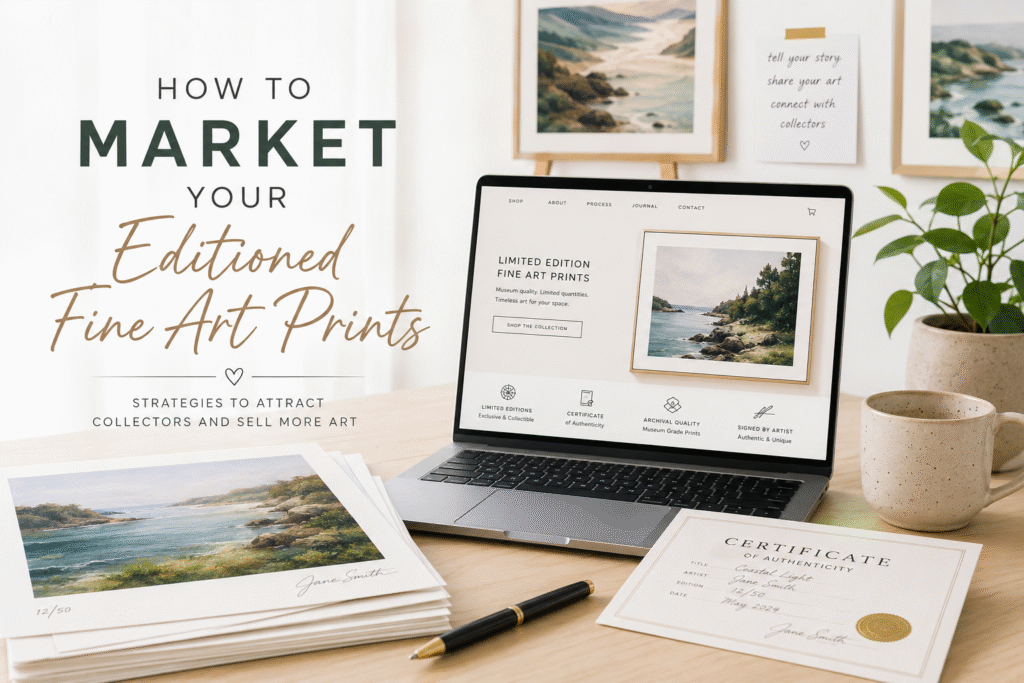
How to market your Editioned Fine Art Prints
Marketing your editioned fine art prints is an essential step for artists seeking to reach discerning collectors who appreciate unique art. In today’s competitive art market, understanding effective art marketing strategies is crucial. This article explores various ways to promote your art prints, emphasizing storytelling, rarity, and craftsmanship. Through strategic marketing, artists can attract buyers who value exclusivity and quality, ultimately enhancing their presence in the art world.
Understanding your audience

Knowing your audience is fundamental to any marketing strategy, particularly in the realm of fine art. Fine art collectors are often discerning individuals with specific tastes and preferences that can vary significantly. Start by identifying the demographics of your potential buyers. Consider factors such as age, income level, lifestyle, and interests. For instance, a collector in their 30s may gravitate towards contemporary art, whereas someone in their 60s might prefer classical styles. This nuanced understanding will guide your marketing decisions, from the platforms you choose to your messaging.
Utilizing social media platforms like Instagram can be highly beneficial for artists. Instagram, being a visual platform, allows artists to showcase their work, engage with followers, and promote their prints effectively. Consider creating a content calendar that highlights your art, shares behind-the-scenes processes, and tells the story behind each piece. Engaging storytelling connects with buyers on a personal level, making them more likely to invest in your work. For example, if you create a series inspired by nature, share the experiences that led you to each piece, enhancing the emotional connection with your audience.
Additionally, exploring online art communities can help you connect with fellow artists and potential buyers. Engaging with other artists can lead to collaborations and increased exposure for your work. Attend art fairs, exhibitions, and local art events to meet collectors face-to-face, building relationships that can lead to sales. Networking at these events can also provide insights into current market trends and collector preferences, allowing you to tailor your offerings accordingly.
Building your brand as an Artist
Your brand as an artist is an extension of your identity and encompasses your artistic style, values, and
Your brand as an artist is an extension of your identity and encompasses your artistic style, values, and the narrative you wish to share with the world. A strong brand helps differentiate you in a crowded market. Start by crafting a cohesive visual identity that reflects your unique style. This includes your logo, color palette, typography, and the overall aesthetic of your online presence.
his statement can be featured prominently on your website and marketing materials, providing potential buyers with insight into your artistic journey and the motivations behind your work. For example, if your work addresses themes of identity, include personal anecdotes that illustrate your experiences. Remember that authenticity is key; your audience will resonate more strongly with genuine stories rather than fabricated narratives.
To further enhance your brand, consider creating a professional website that showcases your portfolio. A well-designed site serves as your online gallery and provides a platform for e-commerce. Your website should be user-friendly, allowing visitors to navigate easily and make purchases without hassle. Incorporate features such as a blog, where you can share updates, insights, and the stories behind new works, enriching the overall experience for visitors.
Highlighting rarity and exclusivity
One of the key selling points for editioned fine art prints is their rarity. Highlighting the limited nature of your prints can create a sense of urgency and exclusivity among potential buyers. Use phrases such as “limited edition” and “only X prints available” in your marketing materials to communicate this concept effectively. For instance, if you are releasing a series of 50 prints, emphasize that only a select number will ever be produced, enticing collectors to act quickly.
Consider offering a certificate of authenticity with each print. This not only adds value but also reassures collectors of the print’s legitimacy. A well-crafted certificate enhances the perceived value of your art and reinforces the idea of scarcity, making your prints more appealing to serious collectors. Additionally, you might include a handwritten note or signature on the back of each print, further personalizing the experience and connecting with buyers.
In your marketing campaigns, leverage the power of storytelling to emphasize the uniqueness of each piece. Share the inspiration behind the artwork and the process involved in creating it. This narrative can make potential buyers feel more connected to the piece, encouraging them to make a purchase. For example, if a particular print was inspired by a significant life event or a specific location, sharing that story can deepen the emotional ties between the buyer and the artwork.
Utilizing online platforms for sales

In today’s digital age, online platforms are a powerful tool for selling art prints. Websites like Etsy, Saatchi Art, and your own website can facilitate sales and expand your reach. Each platform has unique features; explore them to find which aligns best with your artistic brand and audience. For example, Etsy is often favored for its homemade and unique items, while Saatchi Art is known for its professional art sales.
When using online platforms, ensure your product descriptions are compelling and informative. Include details about the materials used, dimensions, and the inspiration behind the piece. High-quality images are crucial; invest time in capturing your prints in the best light to showcase their details and colors. Consider hiring a professional photographer or learning some photography techniques to ensure your prints are presented in the best possible way.
Networking and Collaborations
Networking is a vital aspect of marketing your editioned fine art prints. Establishing relationships with other artists, curators, and gallery owners can lead to collaborative projects and exhibitions, which can significantly expand your audience. Collaborations can introduce your work to new collectors and provide unique opportunities for creative expression.
Consider participating in group exhibitions or local art fairs. These events provide opportunities to showcase your prints and engage directly with potential buyers. Building relationships within the art community can lead to referrals and increased visibility for your work. Additionally, collaborating with other artists on joint projects can help you cross-promote each other’s work, tapping into new audiences.
Effective Use of Email Marketing
Email marketing remains a powerful tool for artists to communicate with their audience. Build an email list of interested buyers and art enthusiasts. Regular newsletters can keep your audience updated about new prints, exhibitions, and special promotions. Consider segmenting your email list to tailor messages based on the interests of different groups, ensuring your content remains relevant and engaging.
In your emails, include engaging visuals and compelling stories about your art. Personalize your messages to create a connection with your audience. Encourage recipients to share your emails with friends or family who might be interested in your work, expanding your reach organically. Additionally, you can offer exclusive discounts or early access to new prints for your email subscribers, incentivizing them to stay connected.
Engaging with Art Collectors and Enthusiasts

Building relationships with art collectors and enthusiasts is essential for long-term success. Engage with your audience through social media comments, direct messages, and by responding promptly to inquiries about your work. Consider hosting virtual studio tours, webinars, or Q&A sessions to foster a deeper connection with your audience and showcase your creative process.
Offer exclusive previews of upcoming editions to your loyal followers. This creates a sense of belonging and encourages them to share your work within their networks. Consider implementing a referral program that rewards collectors for introducing new buyers to your prints, thereby incentivizing word-of-mouth marketing.
Creating a Sense of Community
Fostering a sense of community among your buyers can enhance loyalty and support for your work. Create a dedicated space on your website or social media where collectors can interact, share their experiences, and discuss your art. This community can serve as a platform for feedback, helping you to evolve your art based on their preferences and insights.
Consider organizing events, both online and offline, where collectors can meet you and learn more about your work. These gatherings can strengthen relationships and encourage ongoing support for your art. Additionally, consider hosting workshops or art classes, which can further engage your audience and provide them with a hands-on experience of your artistic practice.
Q&A Section
What is the best way to price my editioned prints?
Pricing your editioned prints requires careful consideration of various factors. Analyze your costs, including materials, time invested, and overhead expenses. Research similar artists to understand market rates within your niche. It’s essential to strike a balance between profitability and accessibility for collectors, so consider offering a range of pricing options for different editions.
How do I handle shipping and logistics?
Shipping can be a daunting task, but planning ahead can simplify the process. Invest in quality packaging materials to ensure your prints arrive safely. Consider offering free shipping as an incentive, but factor this into your pricing strategy. Research reliable shipping services that provide tracking options for both you and your customers, ensuring a smooth transaction experience.
How do I maintain my online presence?
Consistency is key in maintaining an online presence. Schedule regular posts on social media and update your website with new content. Engage with your audience by responding to comments and messages promptly. Keeping your online presence active will help you stay top-of-mind with potential buyers while also showcasing your growth as an artist.
What are effective ways to promote limited editions?
Promoting limited editions can involve various strategies. Utilize social media to create buzz around upcoming releases, employing countdowns or sneak peeks to generate excitement. Consider hosting exclusive pre-sale events for your mailing list subscribers, offering them a first chance to purchase. Collaborate with influencers or art bloggers to reach a wider audience, and highlight the unique aspects of each edition to attract attention and foster urgency.
Leveraging Customer Reviews and Testimonials
Here’s something that might surprise you: collectors trust other collectors way more than they trust marketing copy. When someone sees a genuine review from another buyer raving about your work—or even better, a video of a real person talking about how much they love their print—that’s marketing gold. Social proof is incredibly powerful. It tells potential buyers that real people have already taken the leap, loved what they got, and are willing to say so publicly.
So how do you get reviews? Start by simply asking. After someone purchases, send them a friendly follow-up email thanking them and gently requesting feedback. Make it easy—include a direct link to where you’d like them to review (Etsy, your website, Google). If you want to sweeten the deal, offer a small discount on their next purchase as a thank-you for taking the time to leave feedback. For more guidance on engaging with your buyers, check out our article on how to choose fine art prints to understand what collectors are looking for.
Once you have those testimonials, show them off! Put them everywhere—your homepage, product pages, Instagram, wherever potential buyers are looking. Even better? Ask if any collectors would be willing to do a quick video testimonial. There’s something incredibly authentic about hearing someone genuinely excited about your art that a written review just can’t match. To learn more about building a meaningful collection experience, understanding what resonates with collectors is key.
And here’s the important part: respond to every review, good or bad. It shows you actually care, and it tells future customers that you’re the kind of artist who listens and values their experience. That kind of authenticity builds loyalty that lasts.
Conclusion on how to market your Editioned Fine Art Prints
Marketing your editioned fine art prints is a multifaceted endeavor that requires understanding your audience, building your brand, and engaging with collectors. By employing effective art marketing strategies, you can create a lasting impact and attract discerning buyers who truly appreciate your work. Emphasizing rarity, utilizing online platforms, and fostering community are essential components of this process.
As you navigate the art market, remember that authenticity and storytelling are your strongest allies. Share your journey and the stories behind your work to create connections with potential buyers. Successful marketing is not just about selling art; it’s about building relationships and fostering a community that appreciates your craft and vision.
For further reading on art marketing strategies, consider exploring articles on building your online presence or tips for engaging with art communities. These resources can provide valuable insights and inspire your marketing efforts, helping you to refine your approach and achieve greater success in selling your art.
References
For more information on effective marketing tactics, visit the National Endowment for the Arts. This resource offers in-depth guidance on promoting art successfully, including insights on digital marketing, audience engagement, and building a sustainable career as an artist.
Last updated: May 22, 2026

Author bio – Susanne
Susanne is co-founder of FineArtKlub and plays a central role in both the artistic and operational side of the platform.
As an artist herself, she brings a practical understanding of materials, print quality, and the small details that define a true fine art print. Her work is closely connected to the physical process behind each piece - paper selection, color accuracy, finishing, and the final presentation that collectors receive.
At FineArtKlub, Susanne is responsible for overseeing production, printing, and logistics. She works directly with each edition to ensure that the result matches the intended artistic expression - from the first test print to the final packaged artwork.
Her approach is precise and hands-on. Nothing is rushed. Every print is treated as an individual piece, not a mass-produced product.
Alongside her operational role, Susanne continues her own artistic practice, which informs her standards and attention to detail. She understands what it means to create something that should last - both visually and materially.
At the core of her work is a simple principle: if it is not something she would hang herself, it is not something that leaves the studio.